[ad_1]
SEO is essential to marketing any event, gig, or conference to help people find it when they search online. SEO for events is quite specific. But it’s no rocket science to help your events rank high on search engines.
Read on to learn how to apply SEO fundamentals to maximize your visibility, event registrations, and ticket sales.
Booking the most obvious venues, towns, and cities for your event is tempting. But before you do, you should do some keyword research.
Use Ahrefs’ Keywords Explorer to identify event and location keywords that can drive traffic to your event:
- Enter a seed keyword such as gigs, music, events, or concerts into Keywords Explorer
- Use the filter to enter locations, e.g., Glasgow, Edinburgh, Perth, Dundee
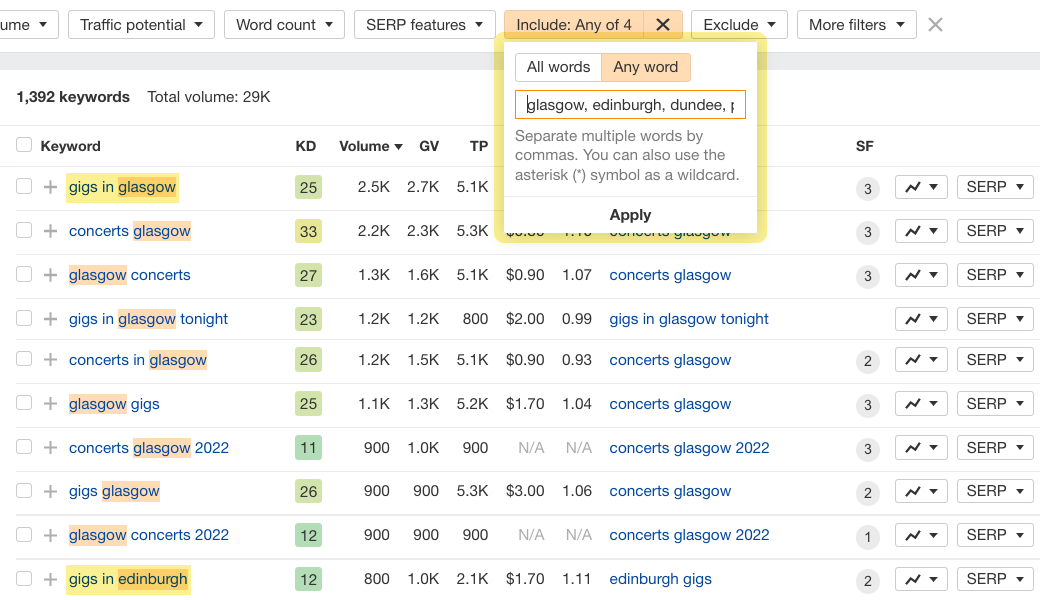
In this example, the search volume and traffic potential are much higher in Glasgow than in Edinburgh even though the city populations are similar.
So you can consider Glasgow over Edinburgh as an event location if you have an audience or fan base there.
What’s more, I can see gigs that are on in Glasgow today, tomorrow, next week, and so on for keywords like “gigs in glasgow.” That’s why doing a little keyword research is important and why SEO is needed to appear in this event pack.
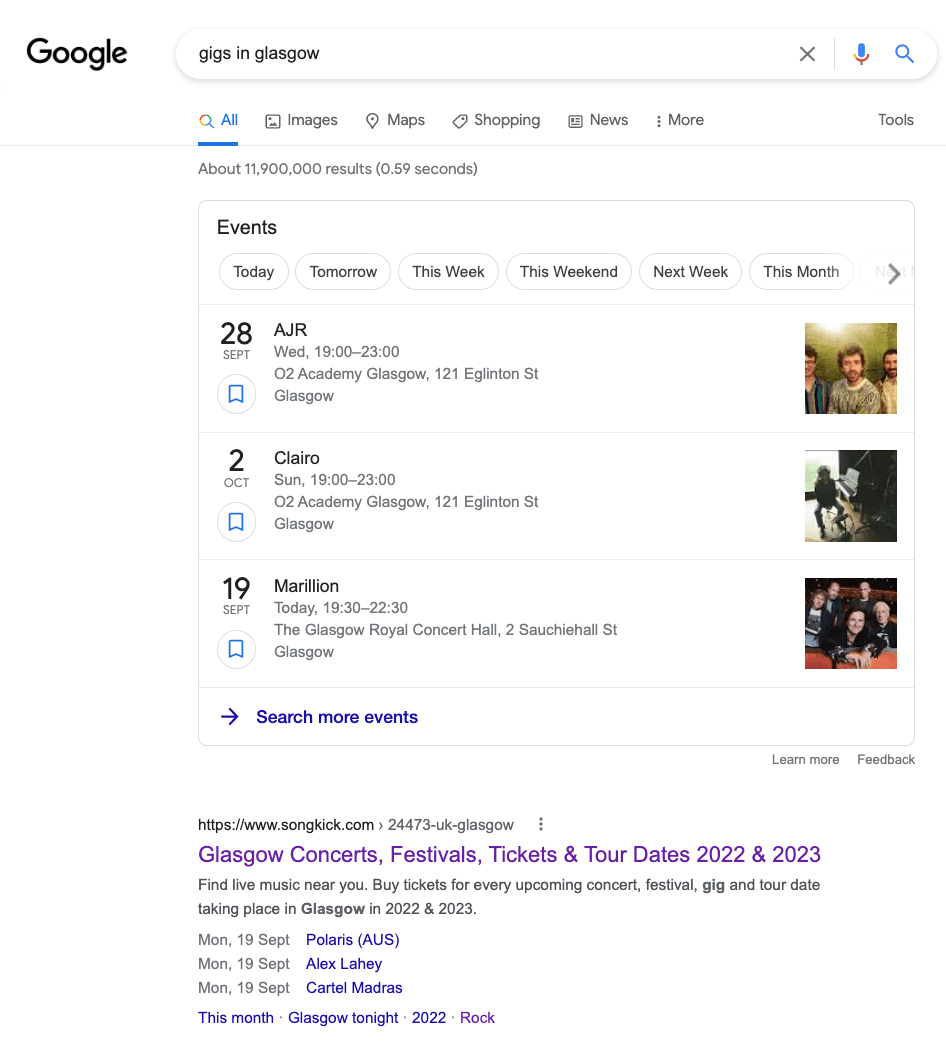
What is the event pack, and why is it important?
An event pack is a special type of Google SERP feature that appears when you perform an event-related query.
The event pack is important because it allows event organizers to appear at the top of Google searches for their events.
It is powered by Google Events schema markup, which allows you to structure webpages with event information that can be displayed in the event pack.
When you click a result, you are taken to Google’s event calendar, which shows more detailed event information such as location, directions, and ticketing links.
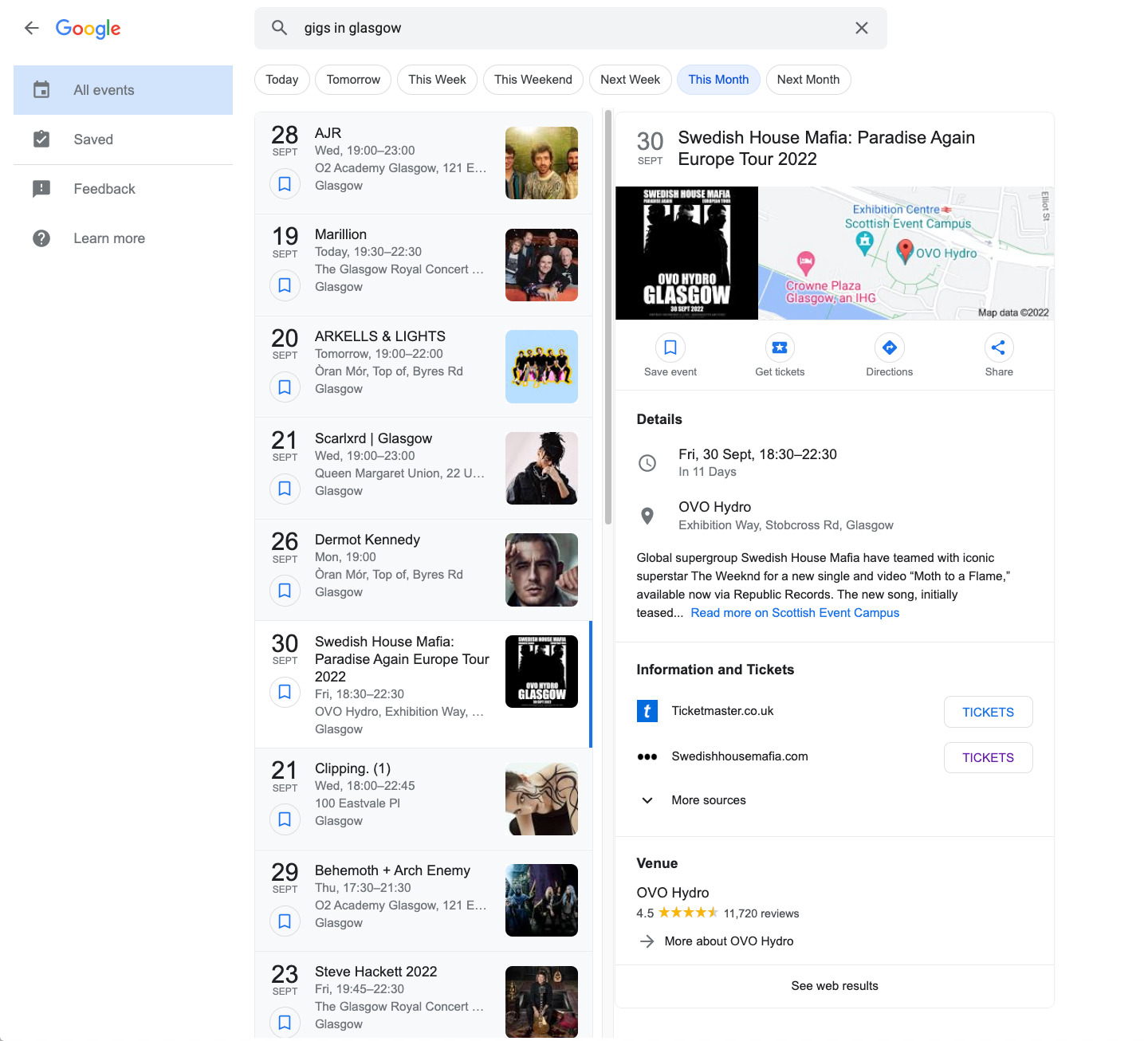
If you want to be featured in the event pack, you need to compile the right event details.
It is important from an SEO perspective to collect the following details about your event to maximize your search visibility.
| Essential event details | Optimal event details |
|---|---|
| Title of event | Photography, artwork, or video |
| Event description | Dress code |
| Start and end date | Age limits |
| Start and end time | Refreshments |
| Venue or location name | Facilities |
| Address, city, country, state, postcode, or ZIP code | What’s included in the ticket price? |
| Phone number | Is there Wi-Fi? |
| Website | Entry requirements: age, visa status, vaccination status |
| Organizer name | Disability access and facilities |
| Organizer phone number | Refund or cancellation policy |
| Organizer website | How to get there by public transport, car, etc |
| Event website URL (booking link) | |
| Event cost |
All of these details are used for the event schema, which enables Google to show them on the SERPs.
Learn more: What Is Schema Markup? How to Use It for SEO
There are various ways to get your event information onto Google: add an event plugin to your website, use a third-party website, mark up the code on your webpage with event schema, or a combination of all three.
1. Use an event plugin to add events to your website and Google
In this example, I created a couple of golf demonstration days using the Events Calendar plugin for WordPress.
Install the plugin and add a new event using your event details.
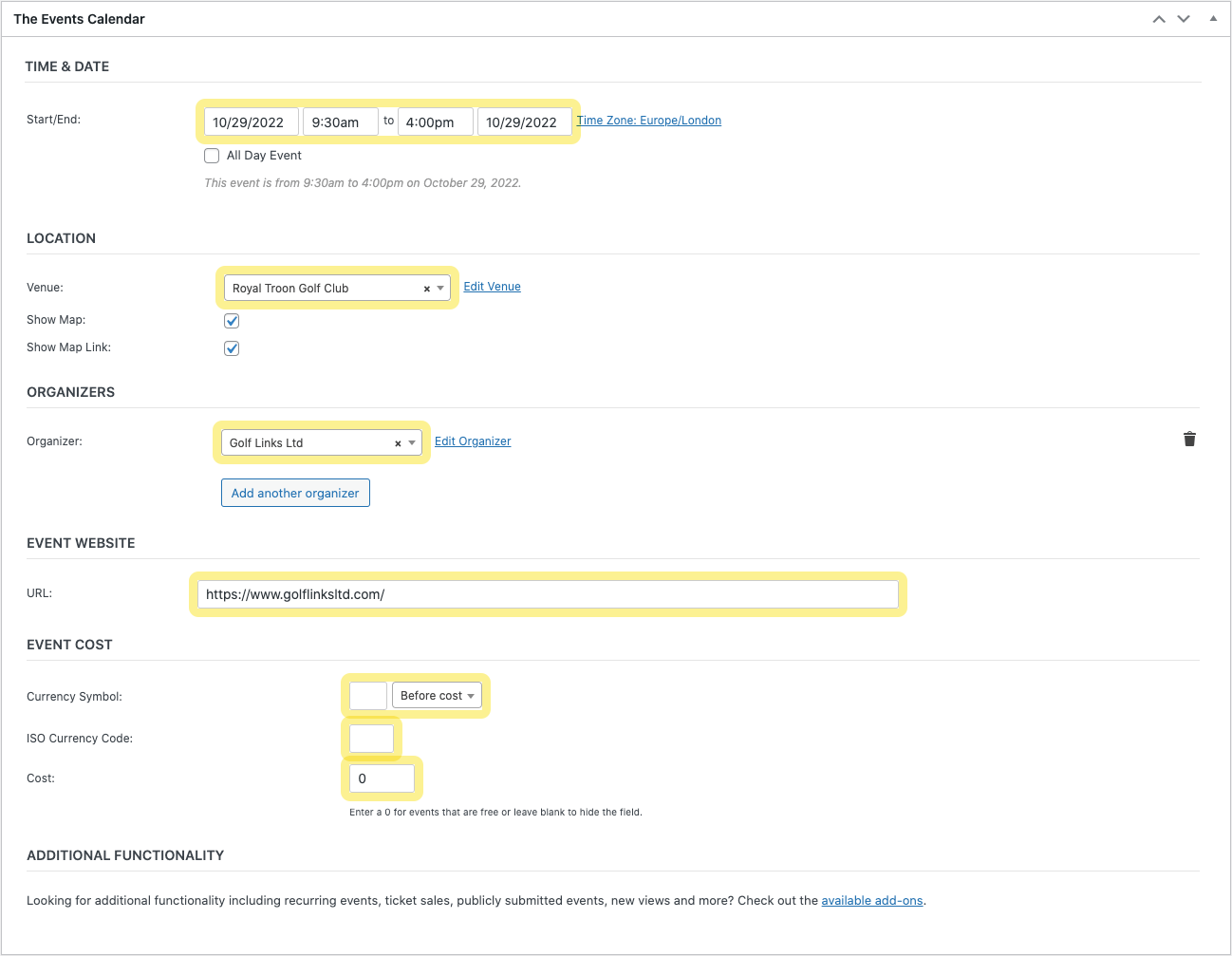
Preview the event and publish it.
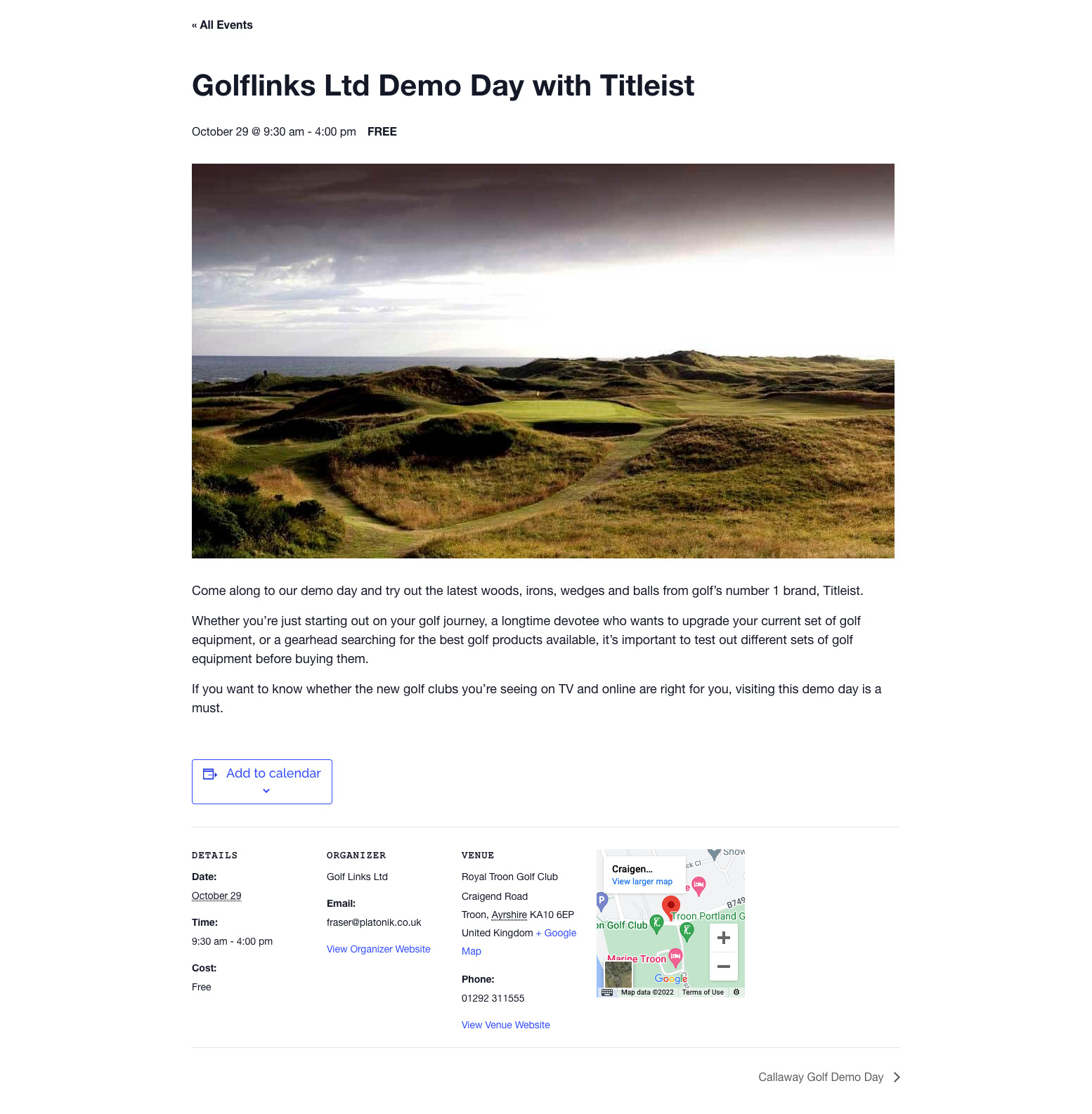
Designers and developers can customize this very basic event page design and layout.
2. Add events to third-party websites
In addition to listing events on your website, there are many popular, industry-specific event and ticketing solutions, including Eventbrite, Ticketmaster, Live Nation, and so on.
Most of these solutions have event-structured data built into their event-creation tools.
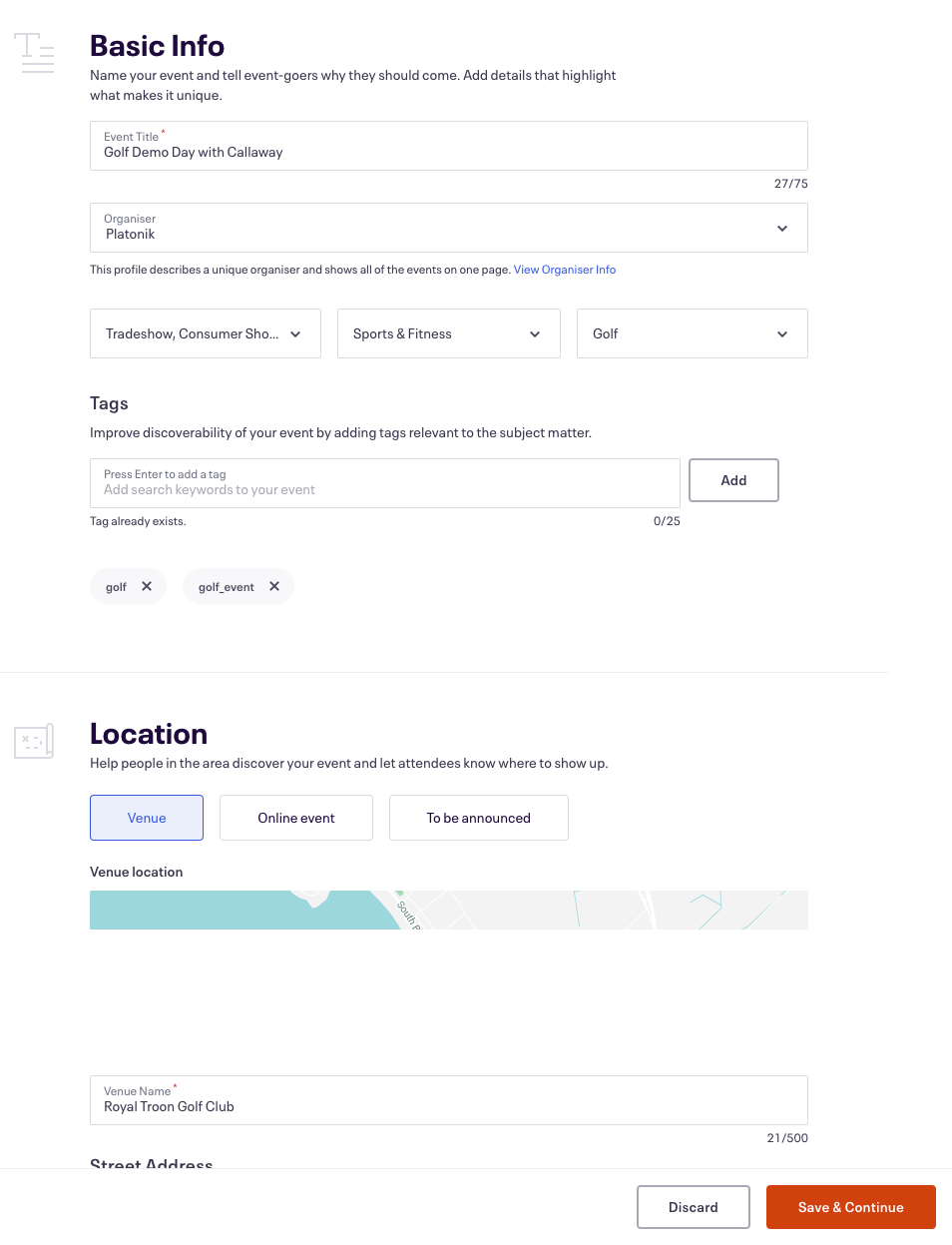
In this example, I created an event using eventbrite.com.
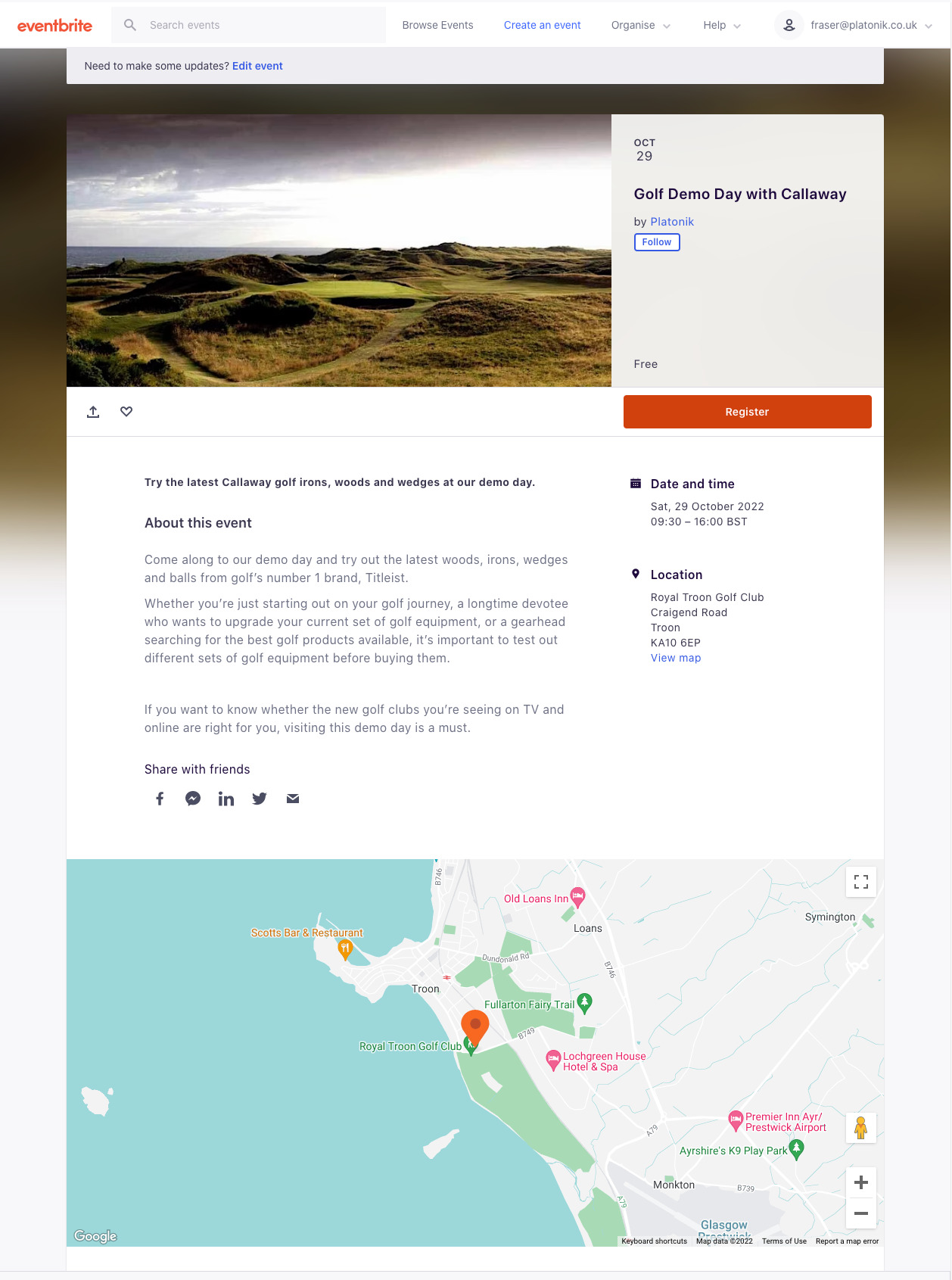
Here are the steps to do it:
- Create an event from the event menu
- Enter the details of your event
- Add your images and description
- Add your ticket pricing and capacity
- Preview the event and publish
3. Manually mark up your event page
If you don’t use WordPress or cannot use a plugin or third-party solution, the third option is to manually mark up your event page with event schema. This is the most simple way to do it:
- Create your event page and publish it
- Go to Google Data Highlighter
- Make sure you’re logged in to Google Search Console
- Select your site
- Press “Start Highlighting”
- Enter your event URL
- Select “Events” from the dropdown
- Choose “Tag this page and others like it” or “Tag just this page,” and then press “OK”
- Highlight the event name and select the name field
- Highlight the time, location, and other information with the correct fields
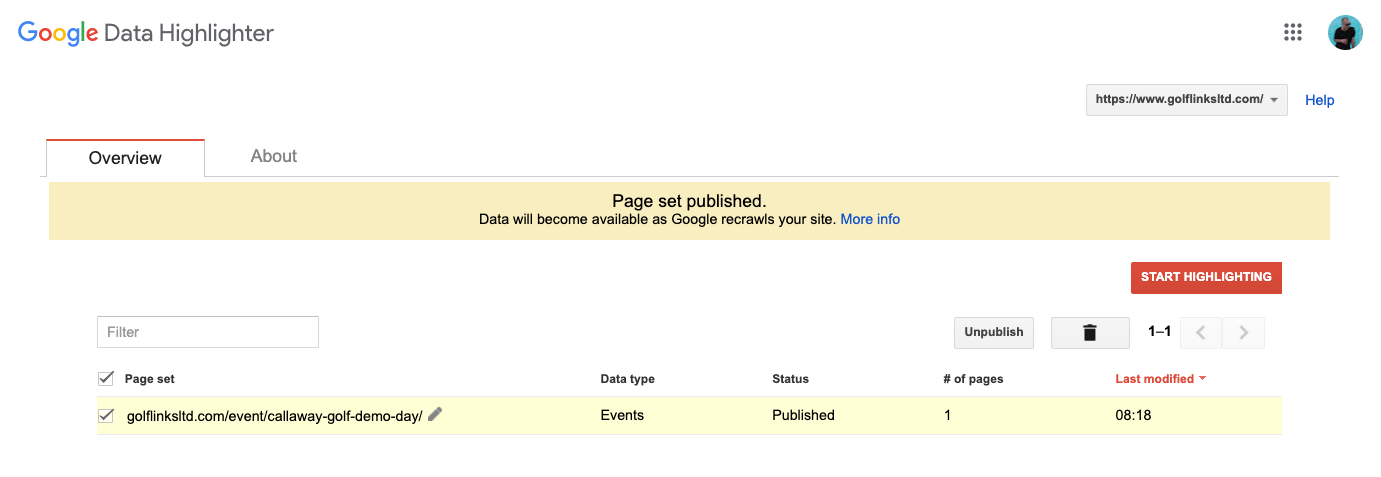
- Then publish
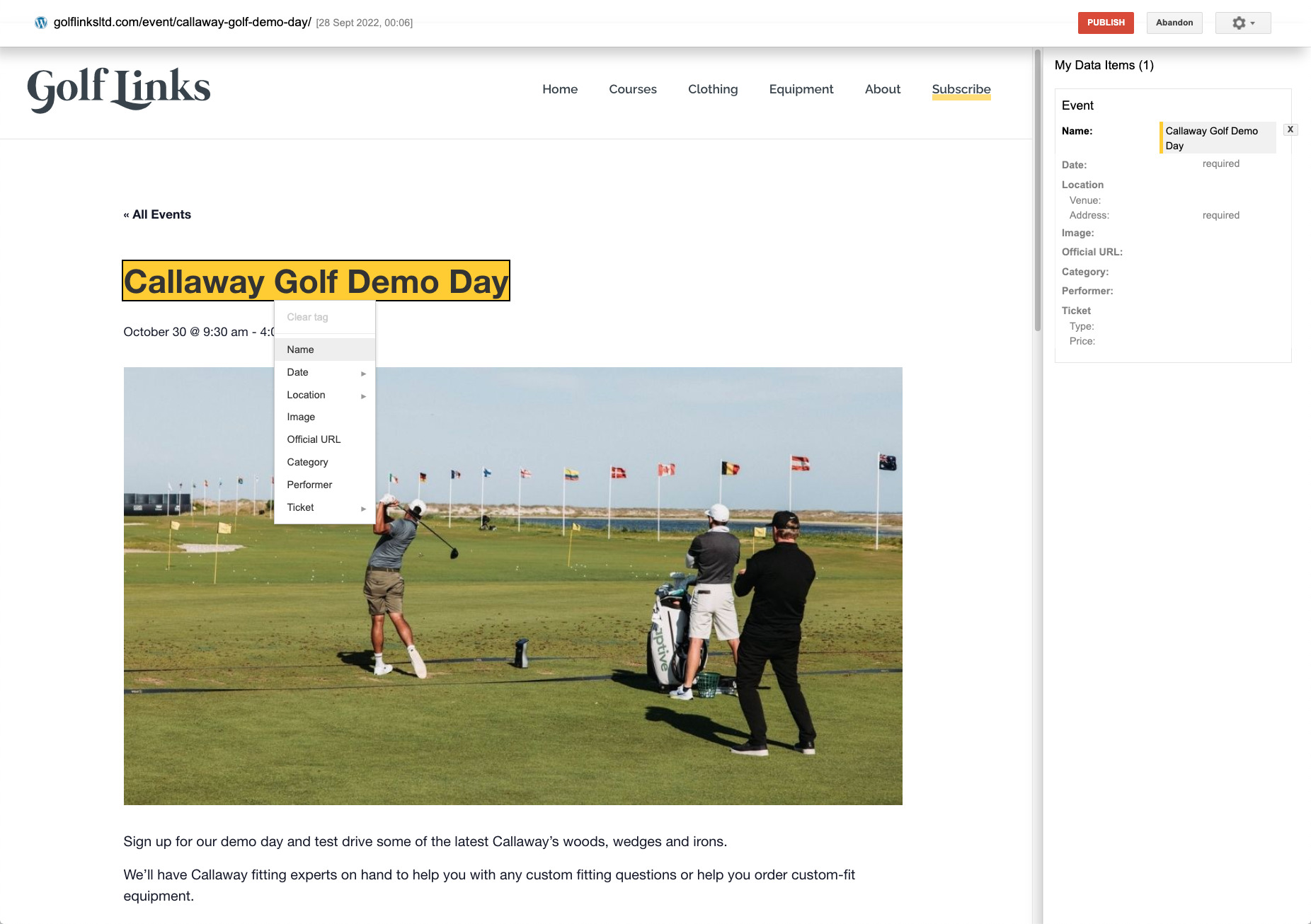
Here’s a short video that shows how the Google Data Highlighter is easy to use:
After publishing, Google Data Highlighter will confirm the data is published correctly as an event in event schema format.
Next, use the Google Rich Results Test tool to ensure that Google has crawled your page and that it shows the correct details about the event in event schema format.
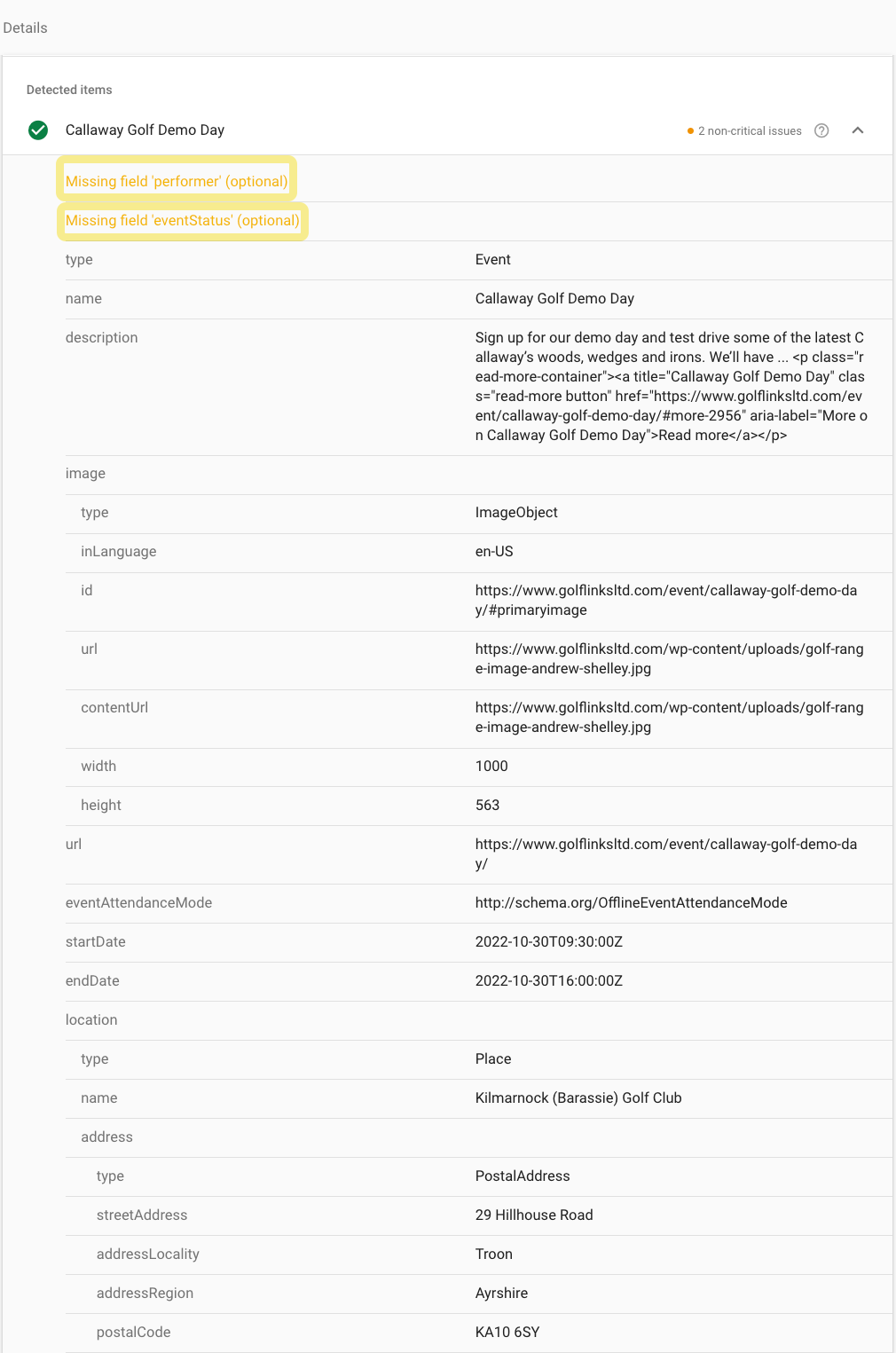
In this case, the validator highlighted in yellow a couple of details that can be added by using the Data Highlighter tool in the previous step or optimizing your event listing in your event software.
By promoting your event with the suggestions below, you can land press coverage and links to your event that will support your SEO and event marketing efforts.
Facebook Events
Facebook has an event listing feature that allows you to view, book, or add events.
- Go to Facebook Events
- Create New Events
- Use your event details to complete each field and publish
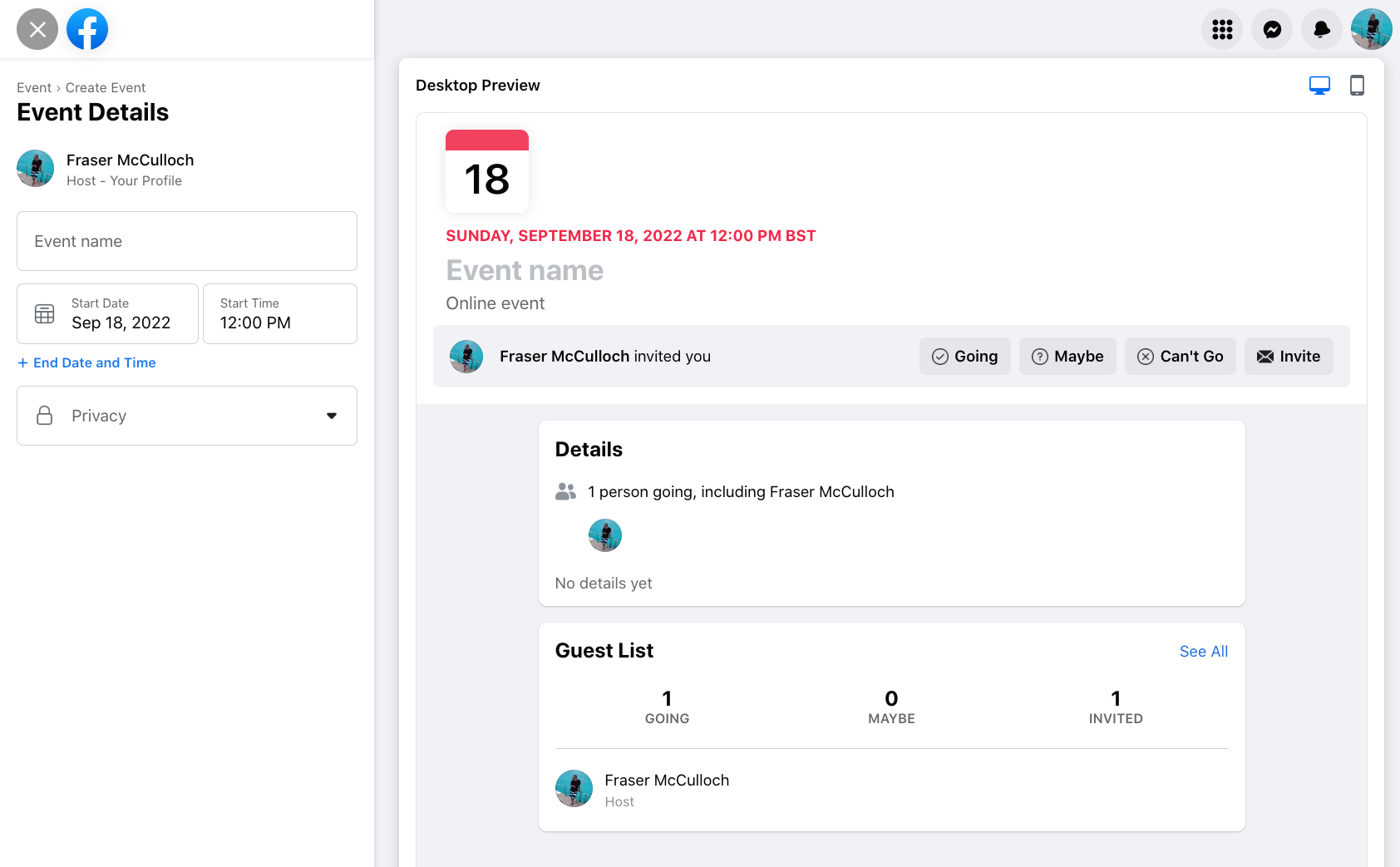
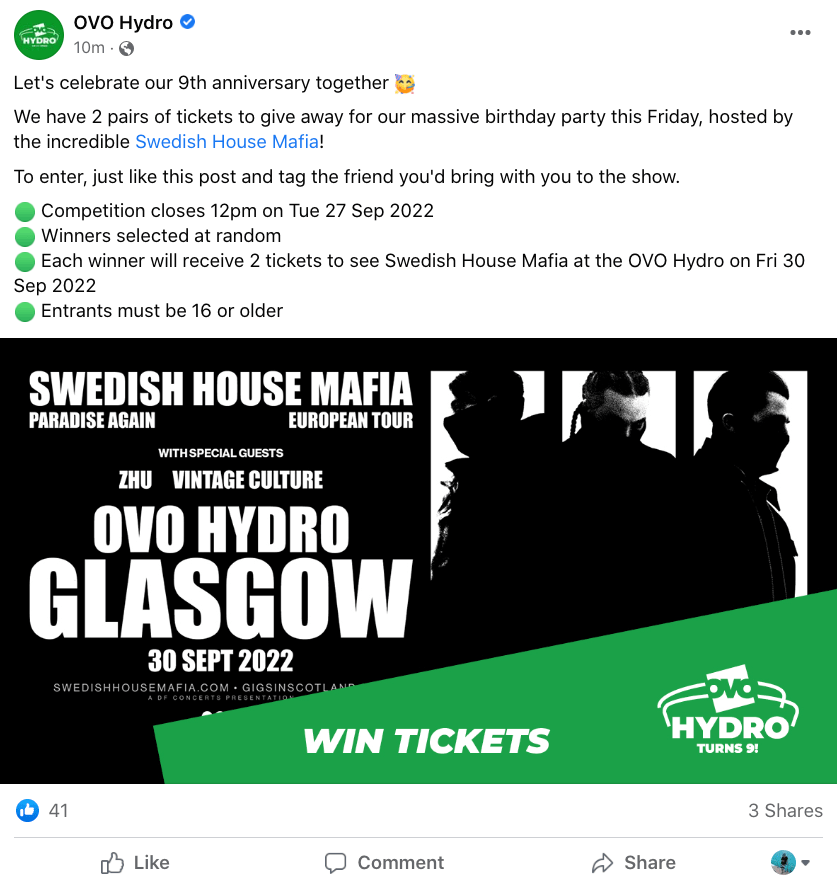
Alternatively, many of the ticket and event promotion websites integrate with Facebook Events to show your events, concerts, and gigs.
Email list
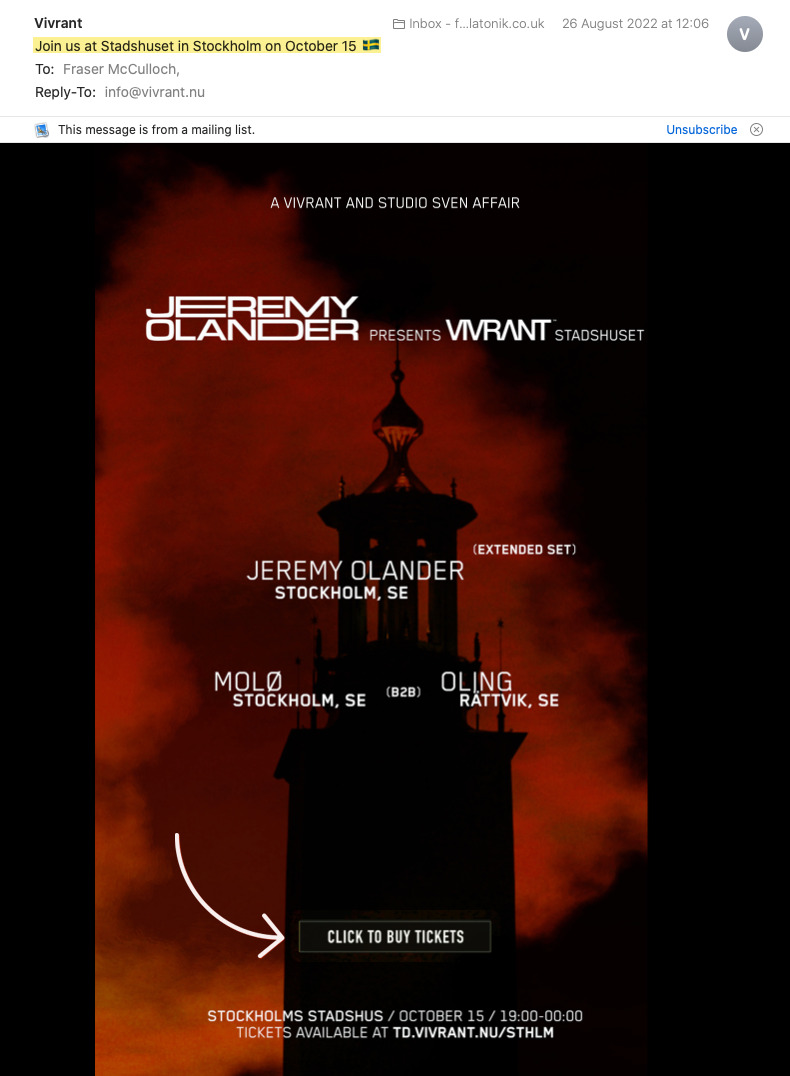
Send an email to your email subscribers and customer base, letting them know about upcoming events.
Link to events on social profiles
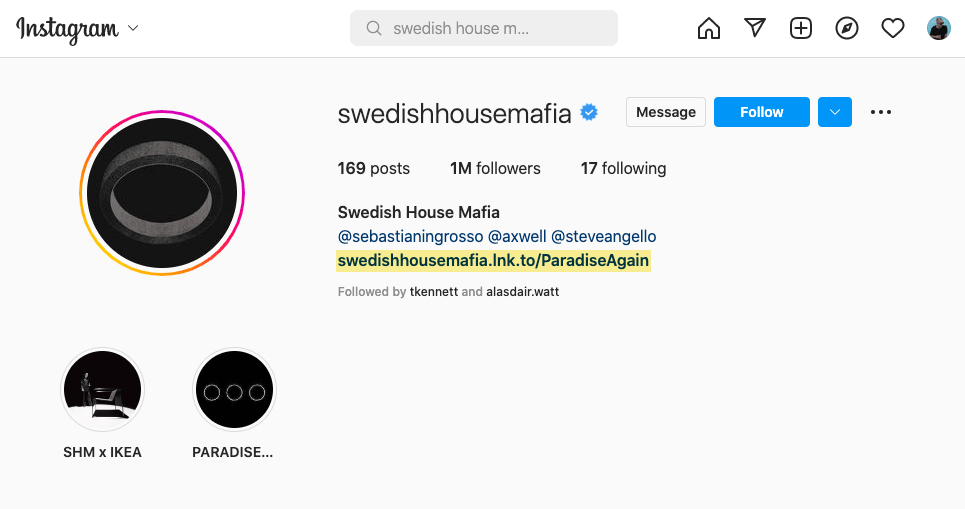
Add your events to your social media channels using a free tool like Linktree.
Links
On your website, add events to the main navigation or link blog posts to the events.
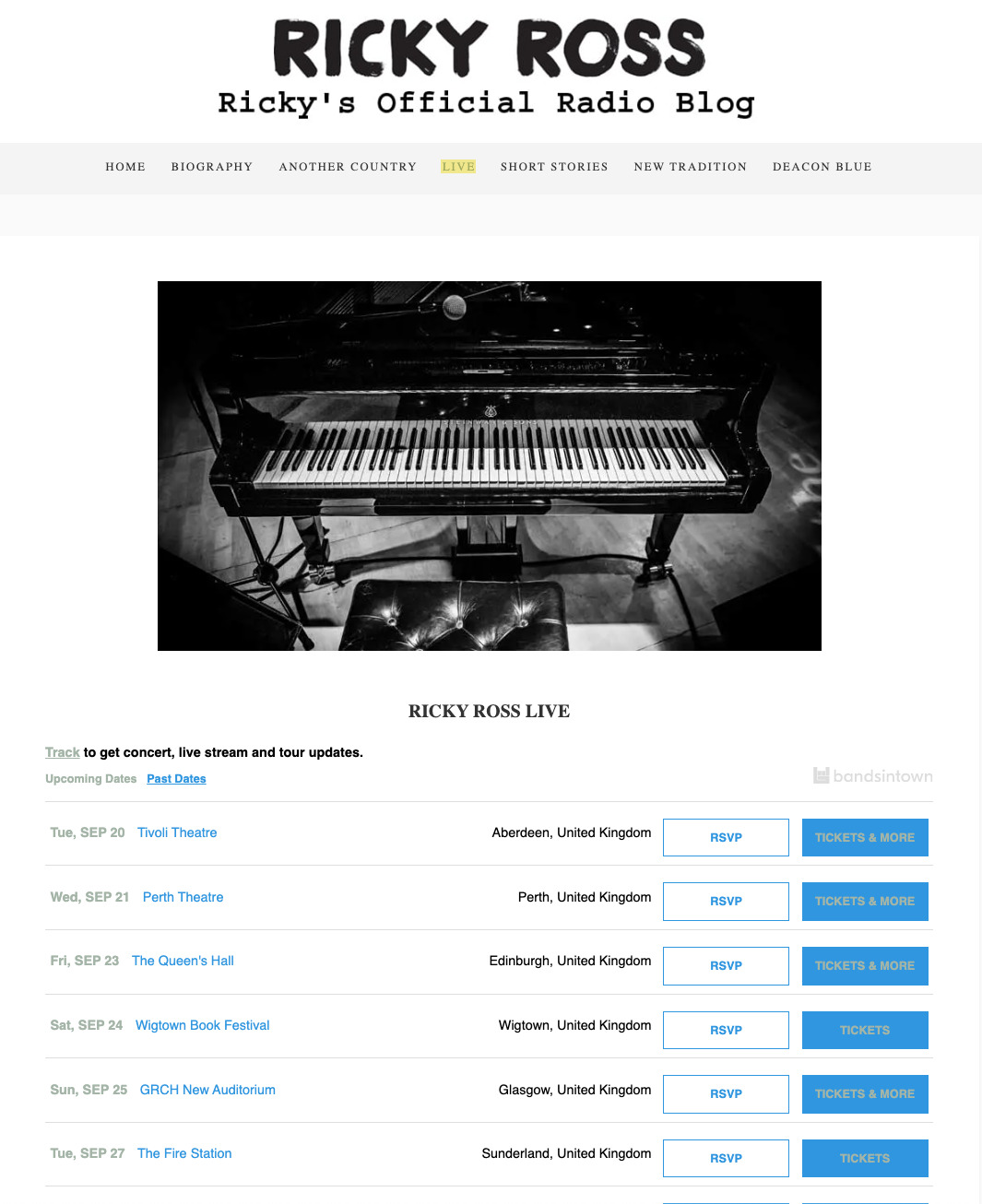
Add concerts and gigs to Spotify
For musicians and artists, you can list your events underneath your artist profile on Spotify—provided you work with one of its approved ticketing partners.
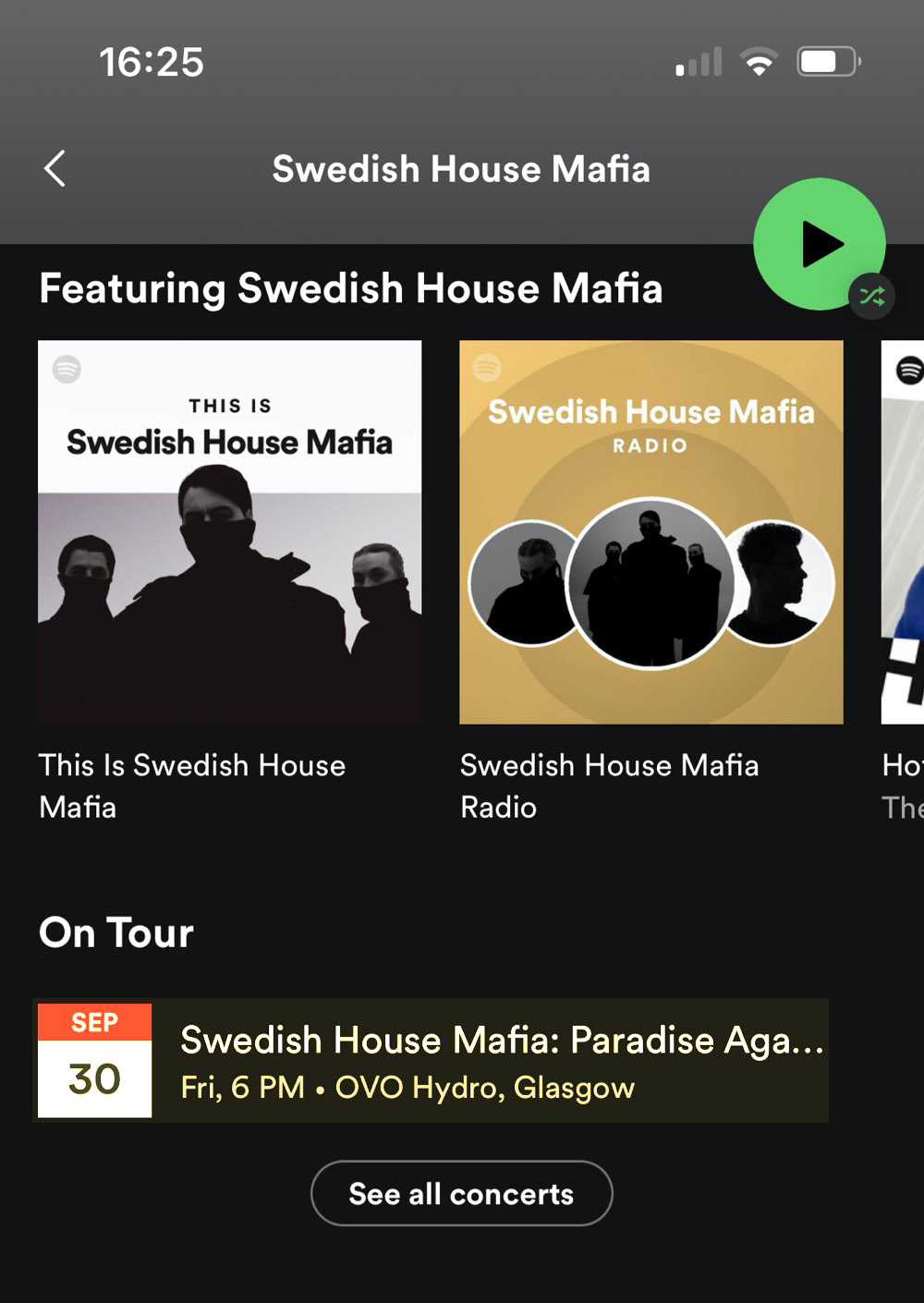
PR, trade, or local press
Reach out to people in your industry or local or trade press to make them aware of your events.
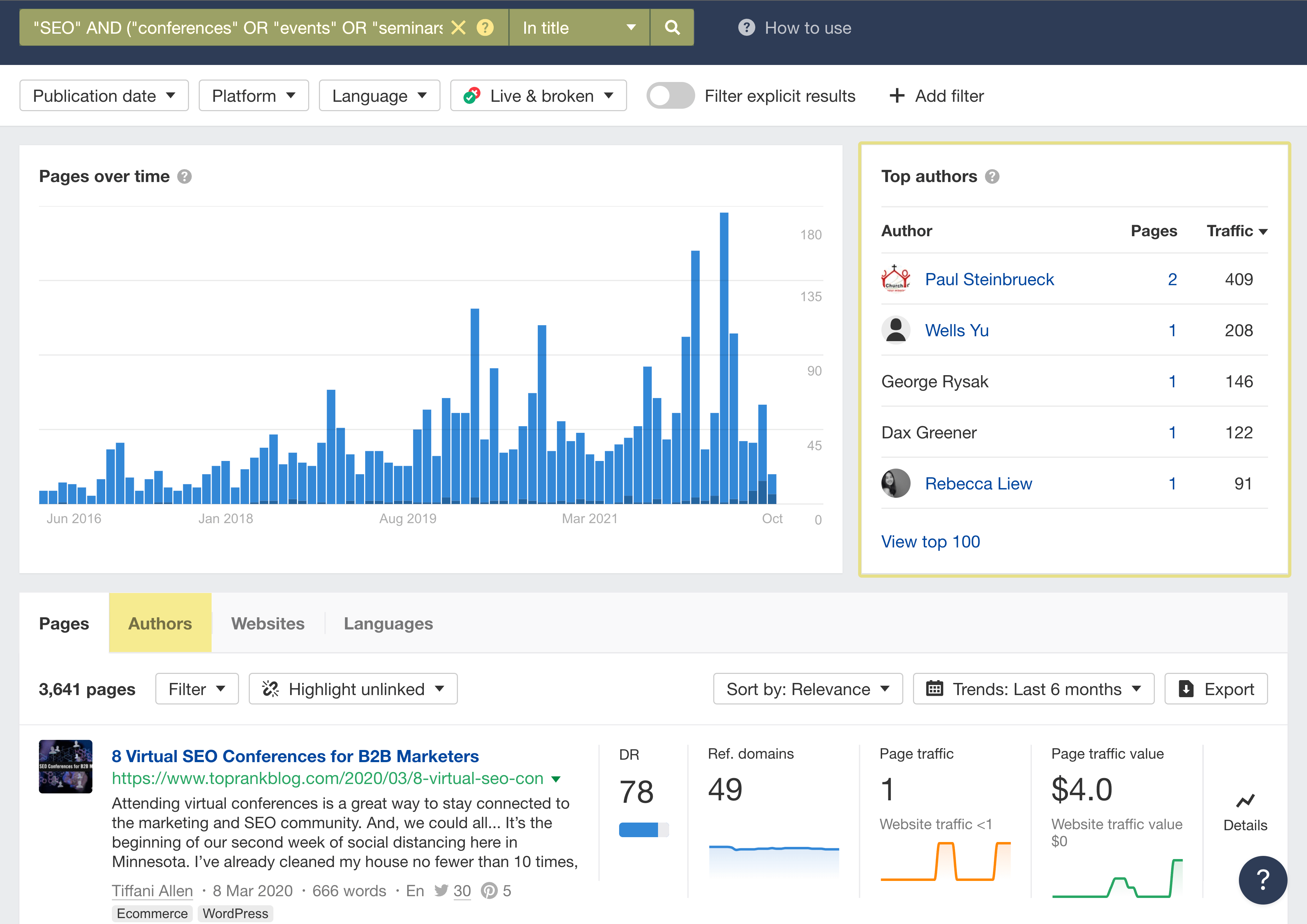
For example, to identify people writing about SEO events, you can:
- Enter the following into Ahrefs’ Content Explorer:
"SEO" AND ("conferences" OR "events" OR "seminars"). Use the “In title” path to only show the most relevant pages. - See the author next to relevant pages; these are the people you can contact.
Here, you can see a link to an SEO event in Barbados that’s yet to happen:
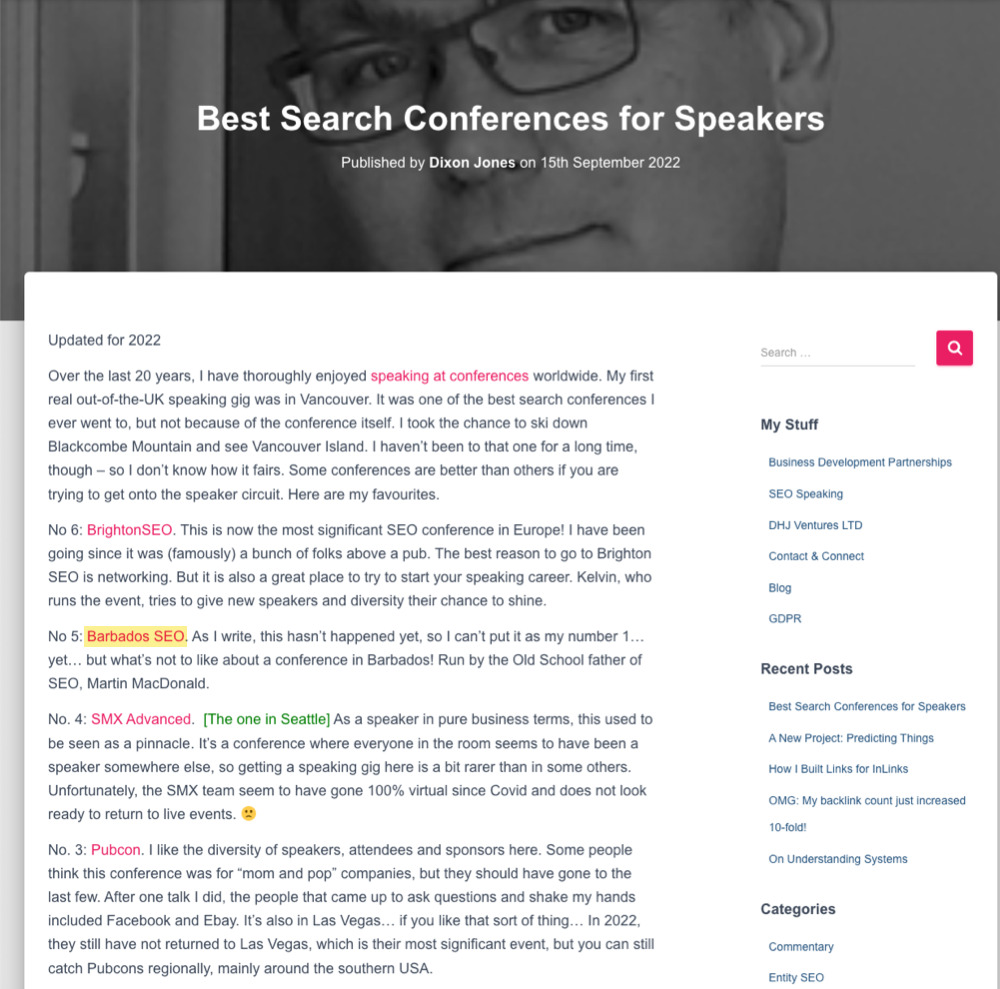
You should aim to get similar mentions with your outreach activities.
Joint promotion with venue host or event sponsors
The venues hosting your event should be more than happy to help promote it, but you need to provide them with your event details and assets.
The venue or event sponsors can promote your event on their email lists, websites, and social channels.
Consider providing them with exclusive promotional assets such as images, interviews, videos, or ticketing incentives.
Use Google Search Console to track events in the Performance section under the Search Appearance section and the clicks you get.
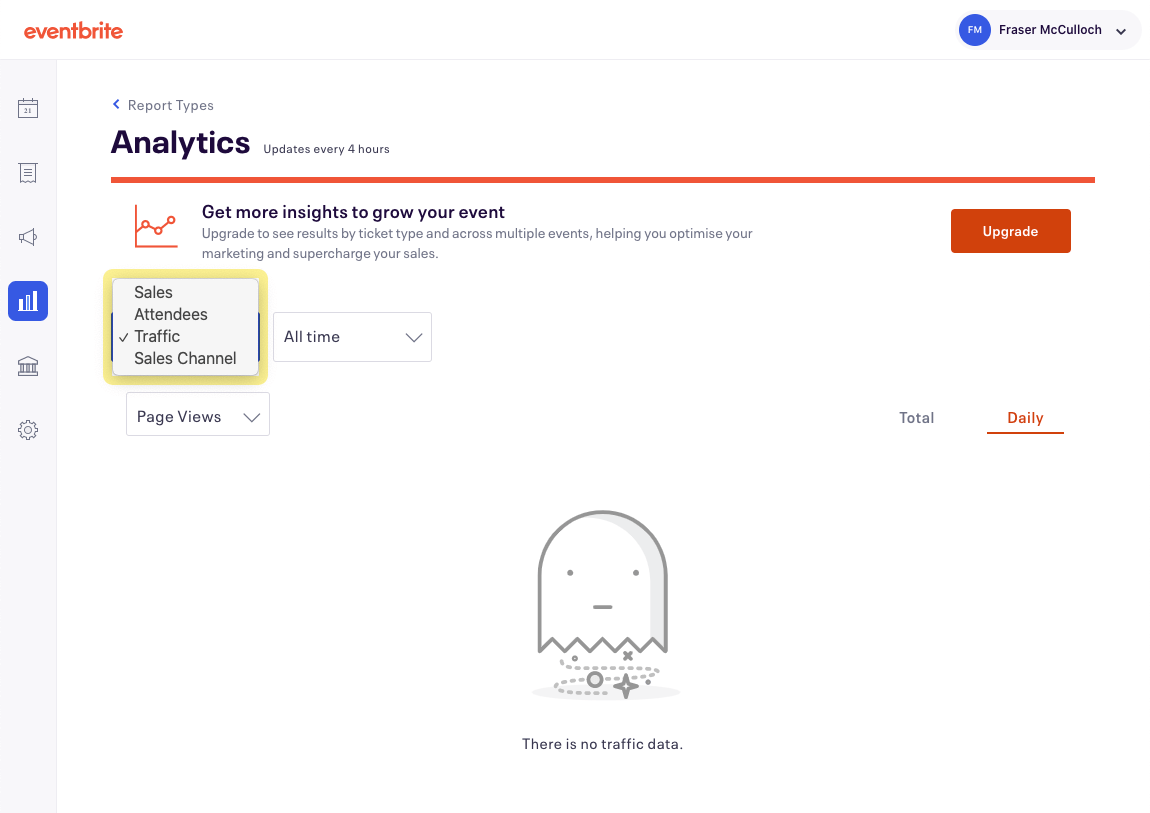
Eventbrite provides reports on sales, attendees, and traffic.
Alternatively, use Google Analytics to create a conversion report.
Final thoughts
To ensure greater event success, follow these SEO steps: do keyword research before booking venues, collect event details, get listed on Google, promote your event, and review your results after an event.
Got questions? Ping me on Twitter.
[ad_2]
Source link